The Cultured Pickle Shop

Preservation. Transformation.

Dusting Off

It’s been 10 years. Maybe it’s time to dust this off and start up again. It’s nice here. There’s room to stretch out, breathe a bit, without all the noise and clutter of the Instagram landscape. There is also an opportunity to tell longer stories with more and better pictures, in a format that fits our style a little better. Look around, it’s just us here and  I think I'm really going to enjoy that. I hope you do too. 

I don't have a very ambitious agenda. I don’t have the time. There is so much actual work to get done. Once I’m up and running I hope that I can post once or twice a week. I’ll do one post that is a review of the previous weeks production and another that recaps that weekends Rice & Pickles bowl. In the end that will be a lot. Here we go…..

-Kevin

Shibazuke

p1110541.jpg

Eggplant has proven itself a challenging vegetable for us to pickle. We have been disappointed with the color as it often turns a corpse like blue-grey, and with the texture, which has been either styrofoam or mush. However it had been a number of years since our last attempt and I really wanted to add a new pickle to the tsukemono line. I had my eye set on shibazuke.

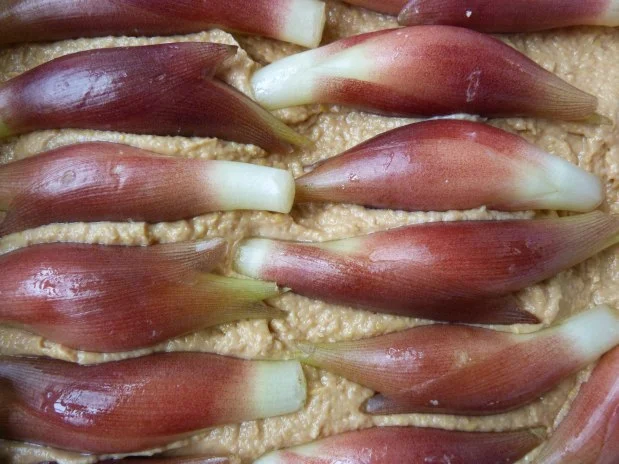
Shibazuke is a traditional lacto ferment of eggplant, shiso, & ginger. The pickle is said to have originated in Kyoto, Japan with some recipes calling for the addition of cucumber and myoga (the new shoots of a ginger relative). While looking for recipes I had trouble finding one that was fermented, most calling for acidification by means of rice vinegar or umezu (the brine from umeboshi). I reached out to Naoko Moore, a culinary educator in Los Angeles, who has the informative website naokomoore.com and is co-authoring, along with Kyle Connaughton, an up and coming book on Donabe (claypot) Cookery. Naoko sent me a very authentic and basic recipe for Shibazuke.

The technique is a bit of a departure for us. Usually we will cut or shred our vegetables, salt them at about 2%, let them sweat for the day, and pack them into the vessel, the brine covering the top, allowing them to ferment for an average of six weeks or so.  In this case we layered the eggplant, shiso, and ginger- salted at 5%- and allowed the brine to develop in the vessel under weight. We fermented the pickle for only 2 weeks.


p11105062.jpg

The resulting pickle was truly wonderful. Salt forward, the eggplant had great texture with a acute ginger bite. But this pickle is really all about the shiso, it's herbal pepperiness weaves itself throughout, and that color. That Color!!

mime-1.jpg


Soon after leaving the fermenting vessel the shibazuke was jarred up and left the Shop, headed for Chicago, where it sat next to donabe smoked salmon in a dish created by Chef Kyle Connaughton for this years Imbibe and Inspire conference.


p1110545.jpg

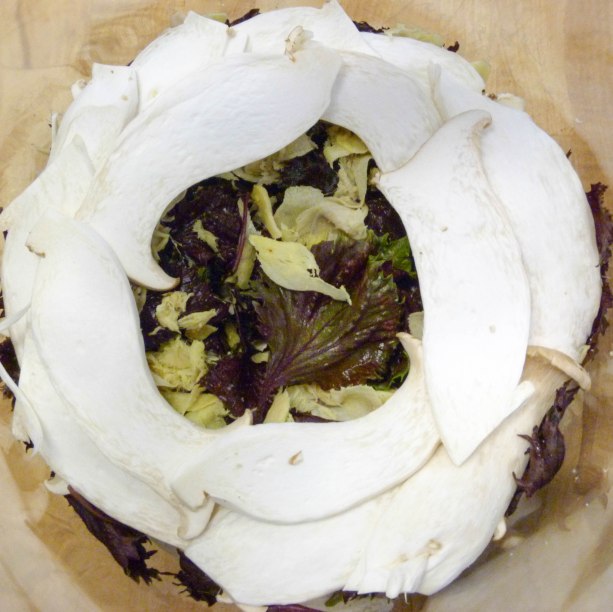
The eggplant texture  reminded me of the flesh of the Royal Trumpet mushroom, which I was scheduled to receive a few pounds of the following week. I was eager to apply the technique to the fungus.

If possible I enjoyed this pickle even more. The subtle earthiness of the mushroom was still present and the texture has reminded many who have tried it of tender squid or octopus. Delightful!

p1110837.jpg

Everybody Kahm Down!

It's not mold, it's yeast, commonly called Kahm, which is a sort of catch-all term for a variety of yeasts that can form a film, or pellicle, on top of ferments.1 It's harmless. No one is going to get hurt here. It's alright, no need to panic. It's incredibly common. It can, however, negatively affect taste. Our lid system prevents the yeast from coming in contact with the ferment. You can just scrape it off. Covering your ferment with cheesecloth makes it easier to remove.

IMG_0377 (1).jpg
IMG_0378.jpg
IMG_0379.jpg
IMG_0384.jpg

Dehydrate It

Change the form. Vary the use. Expand your notions.

Beet & Fennel Brine

Beet & Fennel Brine

Put it in a Shaker - Sprinkle on Soups - Stir into Stews - Dry Rub Meat - Top your Popcorn - Lime Pickle Hollandaise

Spice up your Marinade - Sauerkraut Leather - Rim a Cocktail - Add it to a Dressing - Toast on a Bun - Season your Fries

Fermented Chili Powder & Flakes

Fermented Chili Powder & Flakes

Make a Simple Syrup - Replace Salt - Add to Pasta Dough - Dust Chocolate - Flavor Sauces - Lick off Fingers

Season your Burger - Make a Dip - Add Complexity to Chili - Keep by the Grill - Instant Broth

Spice up Mayonnaise - Whisk into Batter - Coat your Crackers & Chips - Add to Pickling Spices - Sprinkle on Deviled Eggs

Lime Pickle Powder

Lime Pickle Powder

Whip into Butter - Toss into Salads - Sprinkle on your Pizza - Add to Guacamole - Add to Batters - Season Nuts

-Kevin


Burdock Kasuzuke

Kasu. Sake kasu. Sake Lees. Dregs.

Tapping into waste streams and re-purposing for deliciousness.

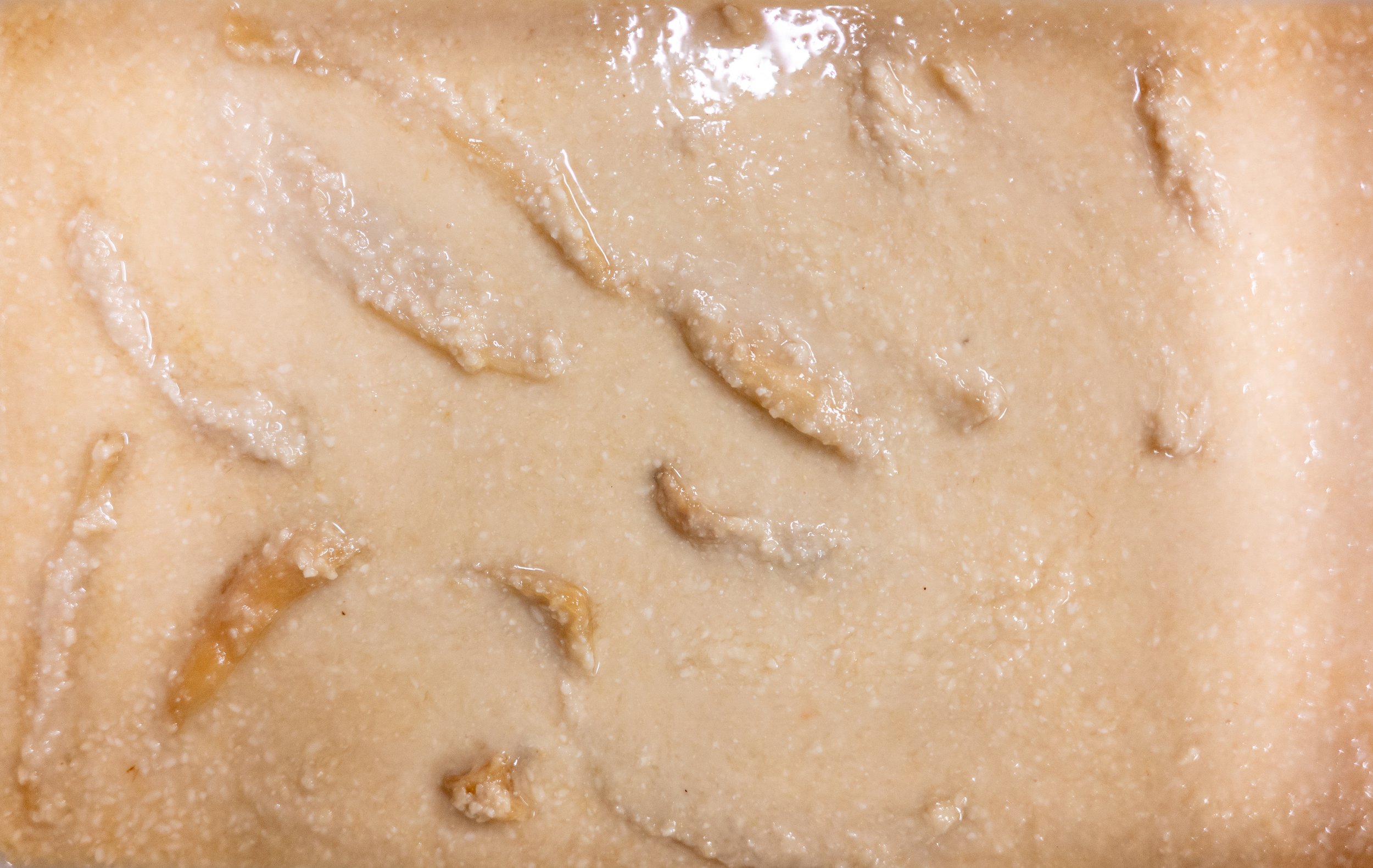
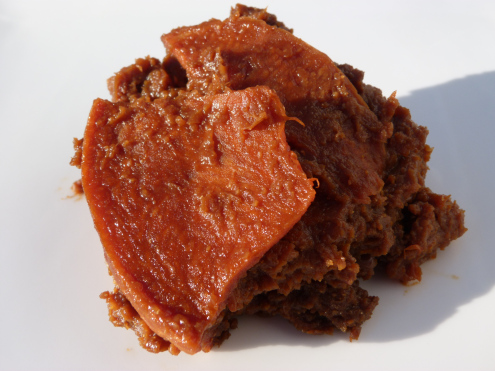
After a tank of sake has run the course of its fermentation—anywhere from 18 to 32 days—what remains is a white mixture of sake, rice solids, and yeast. This mixture, known as the moromi, is pressed to separate the sake from the suspended solids. There are several methods of pressing the sake out, leaving compressed rice solids, or lees, behind. This is Kasu.

Larger sake producers extract the sake from the lees by machine and the kasu comes out in thin dry sheets called itakasu. Smaller producers may press their sake by hand using a wooden box called a fune, which has a lid that gets cranked down on the sake mash, or moromi, which has been placed in small canvas bags. This method will yield a kasu that is moist and chunky called teshibon or namakasu.


Sakekasu

Sakekasu

Kasuzuke or vegetables pickled in kasu, are said to have originated in the Kansai region of Japan as early as twelve hundred years ago. The first vegetables known to be fermented in kasu were white melon and were named shiru-kasu-zuke or Nara-zuke. Later, the technique would used with cucumbers, eggplants, and uri or bitter melon. It was produced primarily by Buddhist monks and used by Samurai for sustenance in wartime and winter. During the Edo period of the 17th century, sake producers promoted the use of kasu widely. Not long after, kasuzuke would become a mainstay in the ever expanding repertoire of Japanese tsukemono.

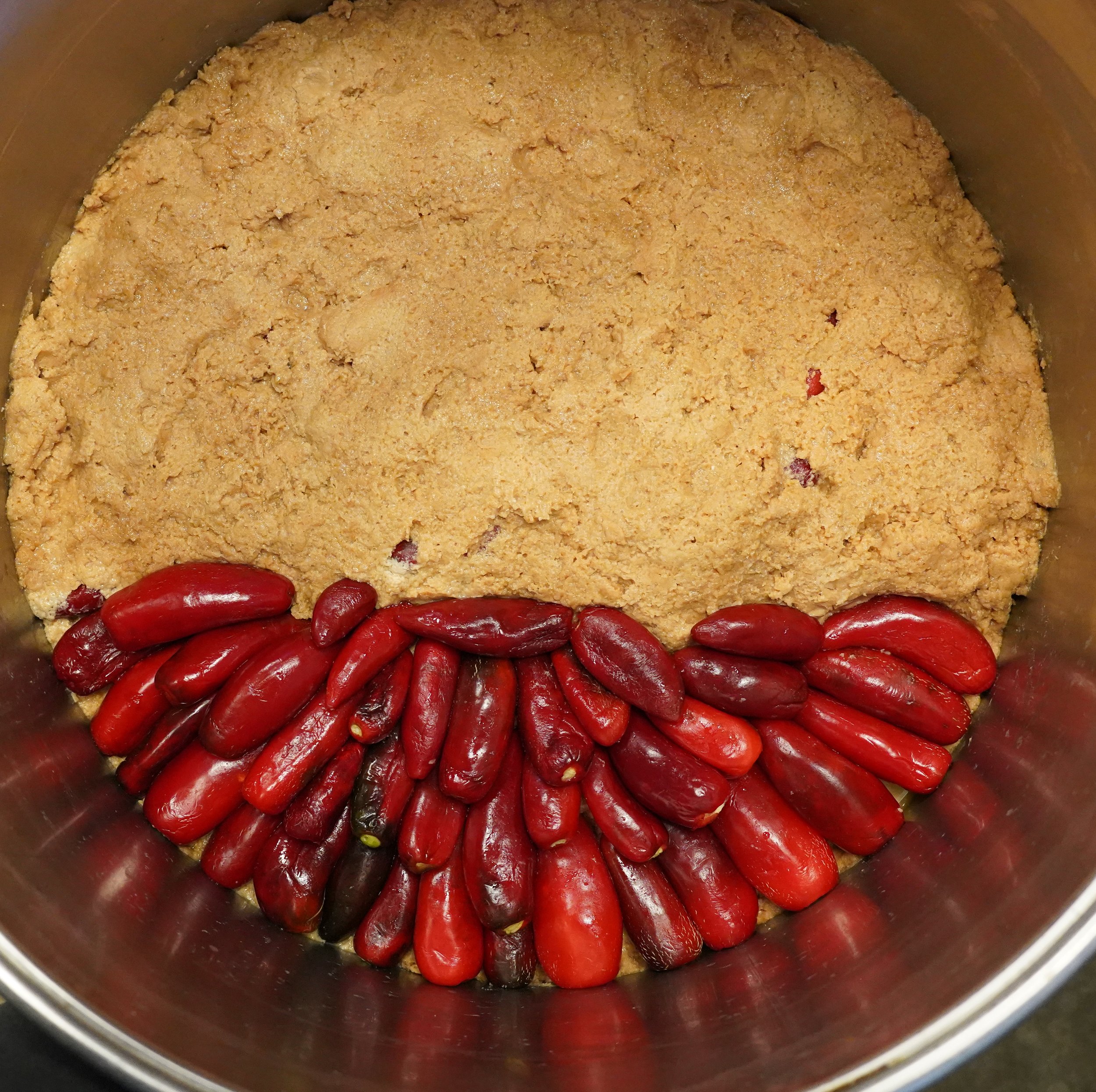
We are fortunate to be located just blocks from Takara Sake one of the largest producers of sake in the United States. We have a long standing relationship with Takara, and after each pressing of their Certified Organic Ginjo Grade Junmai Nama Sake, they put aside about 150 lbs of kasu for us. The kasu has been pressed mostly dry at the factory and has a slightly sticky putty-like texture. Kasu is stored in the refrigerator and the cold makes it stiff and a little unyielding. We allow it warm in a bowl on the counter for the day and as it warms it becomes much more pliable and easy to work with. We knead salt and sugar into it until the dry sheets form a thick sticky paste. We then bury vegetables that have been salt pressed for two days into the paste . The vegetables ferment from three months up to a year or more. The result is a delightful and unique pickle with a distinct sake taste, quite unlike anything found in Western pickling traditions.

Typically we intend to ferment our kasuzuke for 12 months. With this in mind we have found that a ratio of 10:3:1  kasu:sugar:salt, works well for us. Those ratios will be adjusted down for shorter term ferments of vegetables that are more tender. One of our favorite kasu pickles is burdock.

Burdock in kasu

Burdock in kasu

Burdock. Arctium lappa. Gobo in Japan. It is the long tap root of a thistle. Dark and woody, it is deep in earthy overtones and slightly sweet. We wash the burdock well and press it at 6% salt for two days. The burdock is spiraled into a vessel and layered between the kasu-sugar-salt mixture. In the initial weeks of fermentation there will be a fair amount of carbon dioxide released and pockets will appear. To combat this, and insure optimal kasu to burdock contact, we weigh the ferment down.

Our burdock ferments for 12-18 months. One of our longer ferments, it needs that duration for the dense, sturdy root to ferment clean through. It is a testament to the hardy strength of burdock that after a full fermentation it retains most of its flavor and texture. Though the sake and koji permeate, it is still astonishingly earthy and woody.

For years we enjoyed this pickle sliced thinly on a bias. Wood chips, I called them. Wonderful, flavorful wood chips. Then I introduced it to the microplane. Burdock kasuzuke loves the microplane. A melt on your tongue snow of sweet earth.

Burdock kasuzuke, Fresh Hijiki, Scallion

Burdock kasuzuke, Fresh Hijiki, Scallion

Kiriboshi

When our 16-year-old son came home from spending spring break on a class trip to China, he—of course—brought back pickles. A barely fermented chili paste, strong, garlicky, and salty. And a jar of pickled turnips. The chili paste was pretty unexciting but the turnips were to die for. They were hardly brined, with a nice heat from chili and an amazing chewy texture. We immediately wanted to try to replicate it.

p1070045.jpg

We decided we would use daikon, because we had a bunch around the shop, and because its size lent itself to a long, noodle-like julienne. We laid them out on a rack to dry and the next morning found small shriveled confetti. The daikon had lost so much moisture it would blow off the rack as you walked by. Not what we wanted. We tried to air dry the daikon whole before processing it. Fail. We tried several more approaches, always ending up with the same thing.
The Japanese call this Kiriboshi. We knew of Kiriboshi but had never prepared or eaten it. We kept it around while we rethought our approach. Then came lunch.

p1070051.jpg

Alex decided to prepare the Kiriboshi one day for our staff meal. She soaked it in a light dashi, simmered it with hijiki, and served it with some sweet brown rice. At the first bite the light bulbs started flashing. Maybe the turnips in our favorite Chinese pickle hadn't been dehydrated to that amazing texture, perhaps they had been re-hydrated to it. Now we can start.

-Kevin